Your Zone of Genius Belongs at the Center of Your Brand

Your work is already good. Clients rave about you, referrals come in, and you could handle the core of your job half asleep. So why does your brand still read like it could belong to five other people in your field?
It's built on your zone of excellence. That's the work you're great at, known for, and paid for. Your zone of genius is the specific part of that work where your natural wiring meets your skill, where you light up and your clients have their biggest breakthroughs. That's the part your brand should be built around.
Want to see how I found mine? In this Brand Bar Sessions episode, I walk through the moment my own zone of genius clicked and how it reshaped my whole business.
What is the difference between your zone of genius and your zone of excellence?
Your zone of excellence is everything you've gotten very, very good at. It comes with years of practice, a long list of results, and a skill set people seek you out for. Your zone of genius sits inside it, at the spot where that skill meets the way your brain naturally works, so the work feels like play to you and like magic to the person on the other side.
The idea comes from Gay Hendricks in his book The Big Leap. He sorted work into four zones (incompetence, competence, excellence, and genius) and flagged excellence as the dangerous one. It's comfortable, it earns praise, and it's where most successful people end up spending their careers.

Why do so many brands get built on the wrong zone?
Most zone of genius advice is about your calendar: track your energy, delegate the draining tasks, protect more hours for the work you love. That advice is useful, and for a solopreneur it stops short of the bigger move. When you are the business, your zone of genius is your positioning.
Brands get built on excellence for a very practical reason. Excellence is easy to list. Services, credentials, years of experience, and results all fit neatly on a website, so that's what ends up there.
The catch is that your competitors can list the same things. Every bar on the block can pour a solid margarita, and people still cross town for the house cocktail they can only get at one place. Your excellence is the margarita. The house cocktail is your genius, and it's the reason someone picks you over the equally qualified person down the street.

Why does your zone of genius make your brand unmistakable?
Your genius is specific to you. Gallup calculates that the chance of two people sharing the same top five CliftonStrengths, in the same order, is about one in 33 million. Thousands of people may share your job title. The way your brain does that job is yours alone, and that's what makes a Signature Brand impossible to copy.
I lived this one. For 25 years, I worked in my zone of excellence, which is marketing. Copy, websites, social media, visibility strategy: I've done all of it, and I'm good at it. The moments I loved most were always the brand strategy moments, when I could look at a client and tell them exactly what made them brilliant and why their brand should be built around it. Those conversations were where the ahas landed.
That was my genius sitting inside my excellence. Once I built my business around it, I stopped being the brand marketing girl and became the architect of Signature Brands.
Building around your genius also changes how the work feels day to day. Gallup's research shows that people who use their strengths every day are three times as likely to report an excellent quality of life. For a solopreneur, that means more of your week spent on the work that made you start the business in the first place.
How do you find your zone of genius in work you already do?
Your zone of genius is almost always showing up in your business already. You've just been filing it under "stuff I'm good at." It tends to hide in a few places.
🔸 Where the breakthroughs happen. Every client relationship has a moment where something clicks for them. Your genius lives in whatever you were doing right before it.
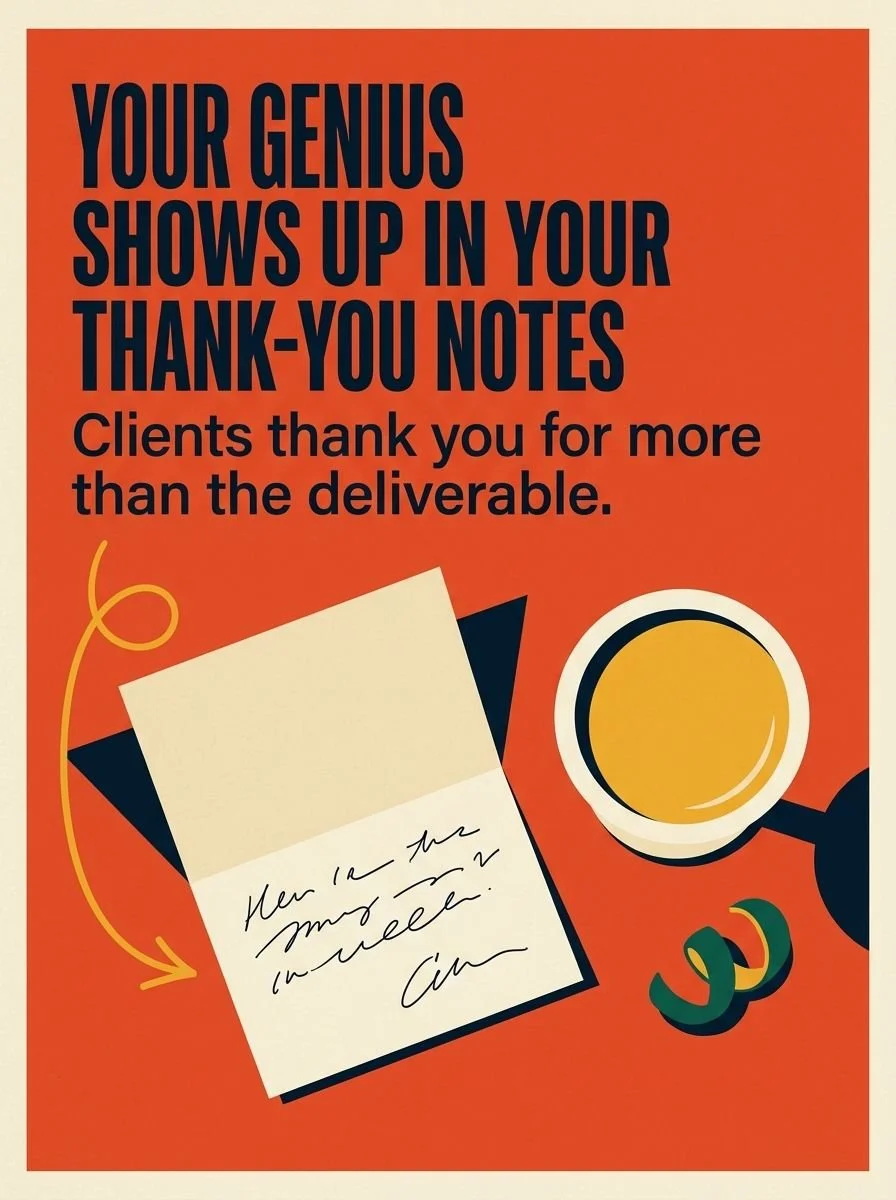
🔸 What people thank you for beyond the deliverable. The project was a website, and the thank-you note talks about how you finally made them feel understood. That second thing is the clue.
🔸 The part you protect. When your calendar gets tight, there's one piece of the work you refuse to rush or hand off.
🔸 The part that feels too easy to charge for. When something comes so naturally that billing for it feels like cheating, you're standing in your genius.
Once you can see it, your genius starts finding its way into your messaging, your offers, and the stories you tell. A lot of it is probably already in your content, waiting for you to stop editing it out. That's when your brand finally sounds like the person your clients rave about.
Why is it so hard to see your own zone of genius?
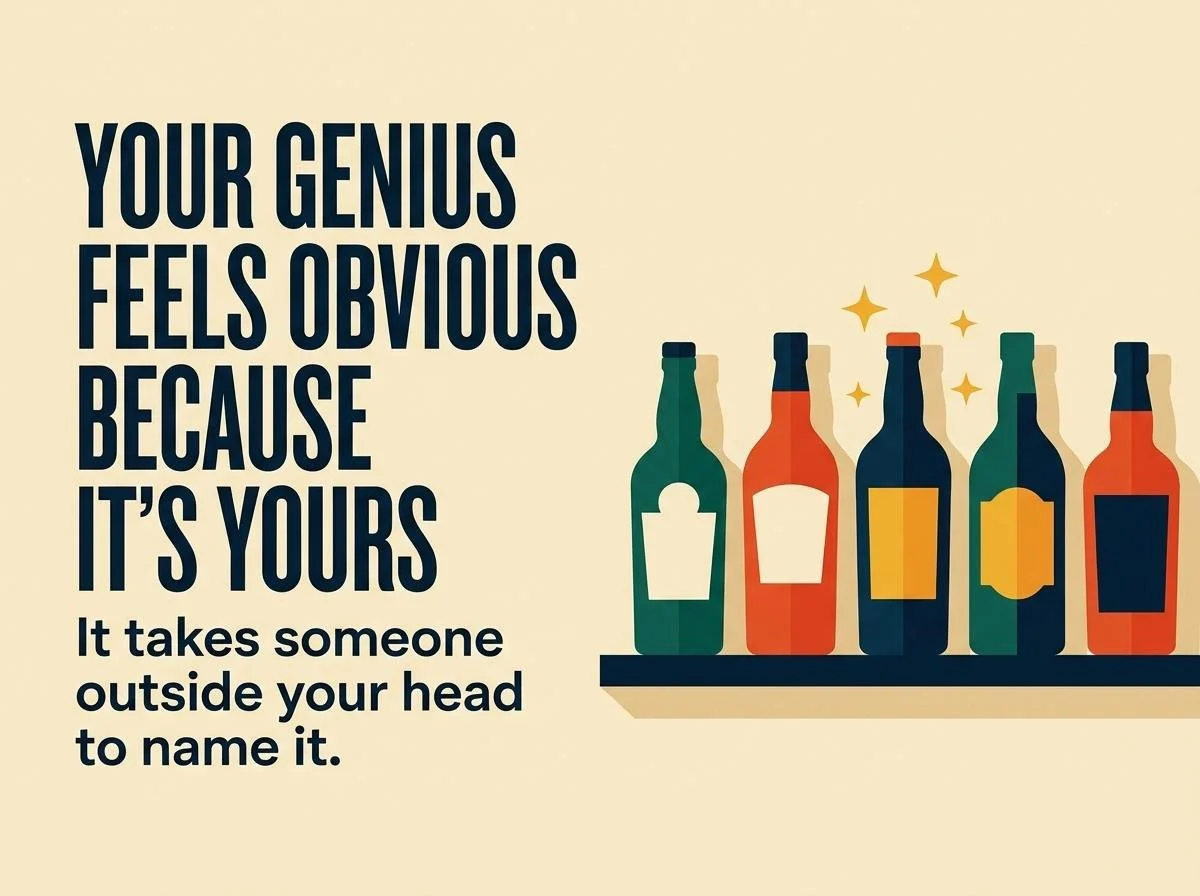
You've been you your whole life, so your genius feels obvious from the inside. The thing that makes a client ask "how did you do that?" feels like plain common sense to you. That's why so many talented solopreneurs undersell the most valuable part of their work, and why a brand can sound boring even when you love the work.
It usually takes someone outside your head to point at it and say, "That one. Build around that." Seeing it in other people is my favorite part of what I do, and it's the whole reason I created the Signature Brand Dossier.
Get your zone of genius in writing
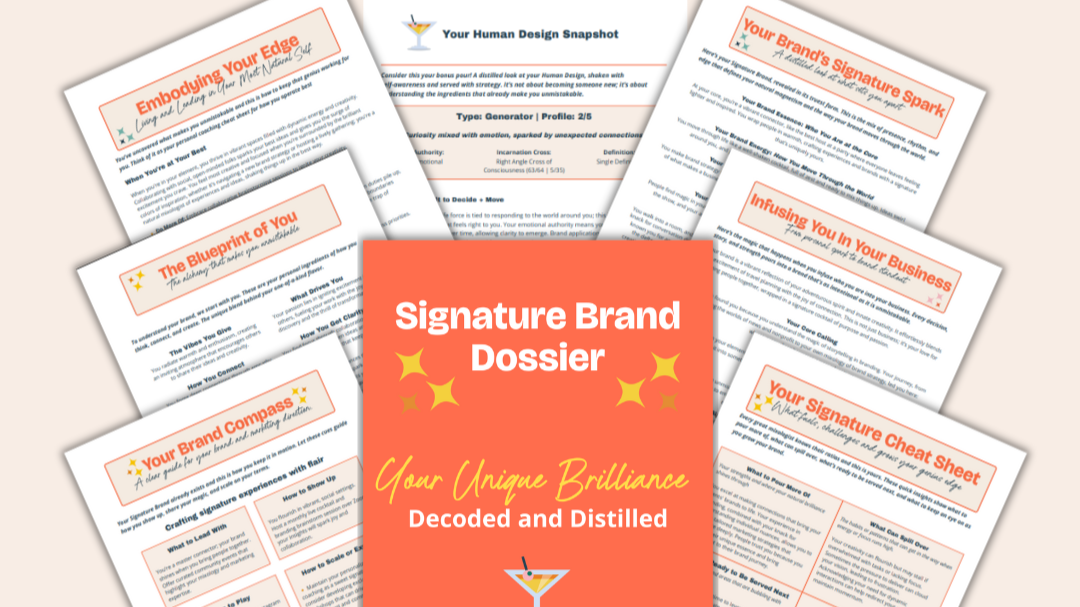
The Signature Brand Dossier is a 10-page personalized brand guide that shows you who you are at your best and what makes your brand unmistakable. You fill out one form with a few creative prompts. I bring in the personality frameworks I use with every client (CliftonStrengths, Human Design, the Enneagram, DISC, and anything else you've taken), run them through the system I've trained on my brand strategy work, and pull out the patterns that keep showing up. Every Dossier gets my personal review before it lands in your inbox.
Inside, you get your Brand Essence, your Market Edge, your Signature Storylines, your Brand Voice Notes, and your Next Right Moves. That adds up to the language for your genius plus clear direction on where to put it to work. It arrives as a Google Doc in 2 to 3 business days, ready to share with your designer or drop into your AI so it writes like you.
One client said reading hers gave her "explicit permission to go deeper into the work that lights you up." That's your zone of genius, in writing.
Your genius has been doing the heavy lifting in your business for years. For $97, the Dossier bottles it so everyone else can see it too. Start your Signature Brand Dossier
Quick Answers
Who came up with the zone of genius? Psychologist Gay Hendricks introduced it in his 2009 book The Big Leap. His four zones are incompetence, competence, excellence, and genius. I use it as a brand lens, because for a solopreneur the zone you build around becomes the brand people meet.
What are some examples of a zone of genius? A bookkeeper whose genius is making money feel calm for clients who dread opening their statements. A photographer whose genius is getting camera-shy people to relax in the first five minutes. In both cases the skill is the excellence, and the specific effect on the client is the genius.
Is your zone of genius the same as your passion? Passion is what you love talking about. Your zone of genius is where that love meets a natural ability other people can feel when you work with them. You can be passionate about plenty of things, and your genius is the one where clients leave changed.
Can your zone of genius change over time? It usually comes into focus over time. Mine was there for years before I built my business around it, hiding inside work I was already excellent at. The more client work you do, the louder the pattern gets.
Keep Reading
🔸 How to Make Your Brand Memorable in Three Steps: Once you know your genius, this shows you how to repeat it everywhere until people remember you after one meeting.
🔸 Can Someone Actually Describe What You Do? Brand Message Clarity: Your genius only pays off when other people can say it back, and this post covers how to get there.
🔸 What Is a Strong Brand (and Why So Many Still Get Overlooked): Read this for the difference between a brand that gets you in the room and one people remember once you're there.