Why Your Brand Sounds Boring When You Actually Love This Work
One of my favorite things I do all month is spend thirty minutes with a Brand Bar account holder on one line from her home page. It reads generic when we start, so we pull at every single word until we land on something only she could have written.
The aha is always big for something that small, because the line we end up with shows her personality and shows how much she loves her work, and the generic version was hiding both of those.
I love doing this. I'll nerd out on wordplay around one sentence for an hour, and whoever's on the other end of that Zoom can see it all over my face.
That's the part worth stealing. She can tell I love this work, and it's the most persuasive thing happening on the whole call.
Your brand is either doing that or it isn't, every day, with every person who reads it. That's why your brand sounds boring. Your voice is probably fine, and the part where somebody can tell you love this just never made it onto the page.
Why your brand sounds boring when nothing is actually broken
You built something efficient, where every post teaches and every caption ties back to an offer and every page moves somebody one step closer to a decision.
Read the whole thing top to bottom and there isn't a single word in there you kept because you liked it.
That's what boring is. A brand can be well written and accurate and useful on every line and still read like a chore somebody had to finish, which is a strange thing to build around work you chose on purpose and have stuck with for years.
Your enjoyment is real. It shows up when a client asks a question you weren't expecting and you talk for ten minutes past the answer. It just stops at the edge of the copy, because the copy is where you get professional.
Why does my brand sound like everyone else?
Because everybody made the same trade, and there's data on how badly it's going.
Stackla surveyed 1,590 consumers and 150 B2C marketers and found that 92% of marketers believe most or all of their content reads as authentic, while 51% of consumers say fewer than half of brands manage it.
Almost everybody thinks it's landing. About half the time nobody's catching it.
You can watch the mechanism happen in one phrase. A branding agency listing the words that make brand voices interchangeable put "We're passionate" at the top of the list, right next to "We're innovative" and "We care."
The most common way a brand says it loves its work is also one of the emptiest sentences in English.
How to show personality in your brand: get specific
Enthusiasm that names a thing reads as real. Enthusiasm that names a feeling reads as marketing.
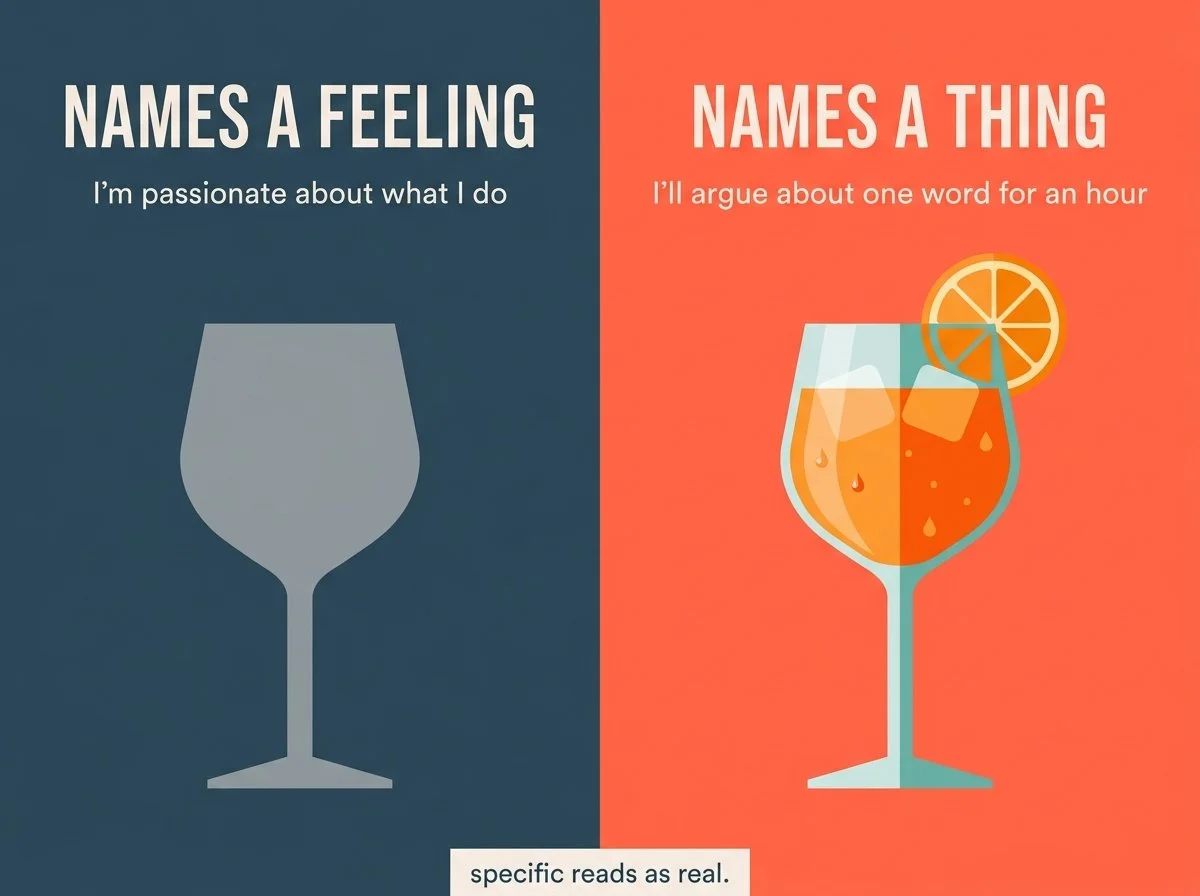
"I'm passionate about helping women build businesses they love" belongs to everybody. Paste it on a competitor's About page and nothing breaks.
"I'll spend an hour arguing about one word in a headline" belongs to one person, because it's a fact about how she spends her time.
Nobody fakes that second kind, and that's the useful part. Faking it means having something specific to love in the first place, so the sentence proves itself the second it gets written.
Which is why "add more personality" never fixes this. Personality tells somebody what you're like. Specificity tells them what you love. Your brand is missing the second one.
How do I show passion in my brand without sounding fake?
Describe the thing instead of the feeling, and by the thing I mean the actual work, including the parts nobody hired you for.
I get on Stories and lose my mind about something I built in AI, usually a skill I'm making for my audience that maybe four people will ever ask about.
It exists purely because building it was fun, and then I couldn't shut up about it, and people who have no interest in AI watch the whole thing anyway.
I play with my brand colors for no reason at all, either. There's no strategy in it. I like them, and messing around with them is a good afternoon.
Both of those are evidence, and they do more work than any sentence that starts with "I'm passionate about."
Can a brand be fun and still be professional?
This is where people bail on the idea, so let me get ahead of it. Every word of this works for a brand that never cracks a joke.
Plenty of brands are serious by design and should stay that way. A bankruptcy attorney has no business being cute about it, and a CPA who's obsessed with a clean set of books is having a wonderful time without telling a single joke.
Enjoyment lives in how you talk about the work itself, which is why this fits any brand at any temperature.
That attorney who's visibly interested in getting somebody their fresh start is doing exactly what I'm describing, in a completely straight register, with no wink anywhere in it.
Tone is a style choice. The test is whether a stranger can tell you like this.
Hold your brand up against that one right now. Set aside whether you're good at this and whether they'd want to hire you, because the only question is whether somebody who's never met you could tell that you enjoy the thing you spend your days doing.
Four places brand passion shows up in your copy
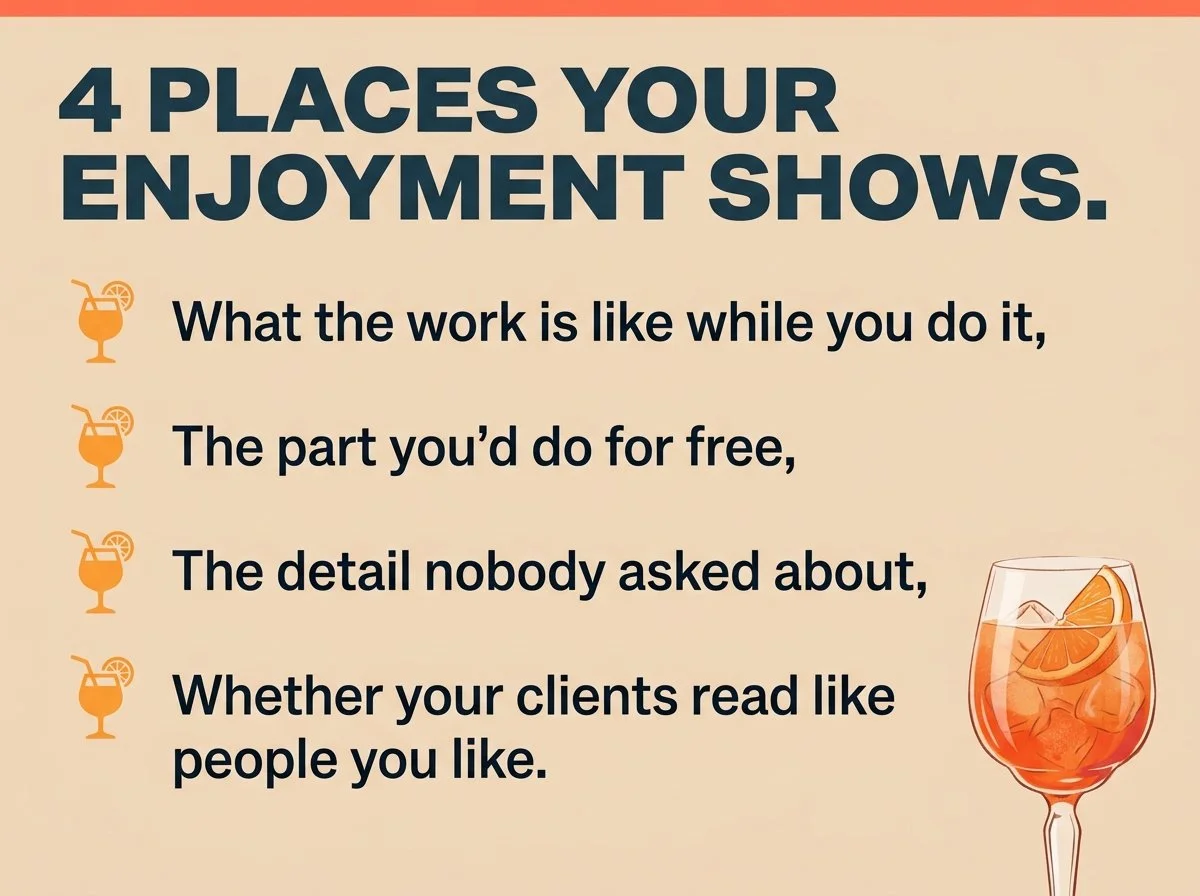
You can check all four in about ten minutes.
🔶 What the work is like while it's happening. Most brands describe what the work delivers and almost nobody describes the doing, and that gap is where your enjoyment went.
🔶 The part you'd do free. Somewhere in your process is the piece you'd do even if nobody paid you, and naming it in one line tells a stranger more than a list of deliverables ever will.
🔶 The detail nobody asked about. Pick the small thing you care about more than any client ever required you to, and give it one sentence.
🔶 Whether your clients read like people you like. Testimonials show results, and one line about what made that person good to work with shows what the result leaves out.
Run your About page and one offer description past those four, out loud, and listen for whether the person who wrote them seems glad to be there.
What makes a brand feel authentic? Enthusiasm people can catch
Enthusiasm actually spreads between people, and there's research on it. Sigal Barsade's work at Wharton on the ripple effect found that a leader's mood moves through a group and shapes how well that group performs together, whether or not the leader meant to send it.
Your brand is doing that right now, and what it's sending is whatever you felt while you wrote it. That's why the dutiful paragraph on your homepage feels dutiful to read.
The fix is one sentence at a time, inside the touchpoints you already have. Find the paragraph where your energy drops halfway through the first line, and rewrite it the way you'd say it if somebody got you started at dinner.
It costs you nothing you weren't already feeling, because you already love this and it's been sitting in the room the whole time while your brand talked about deliverables.
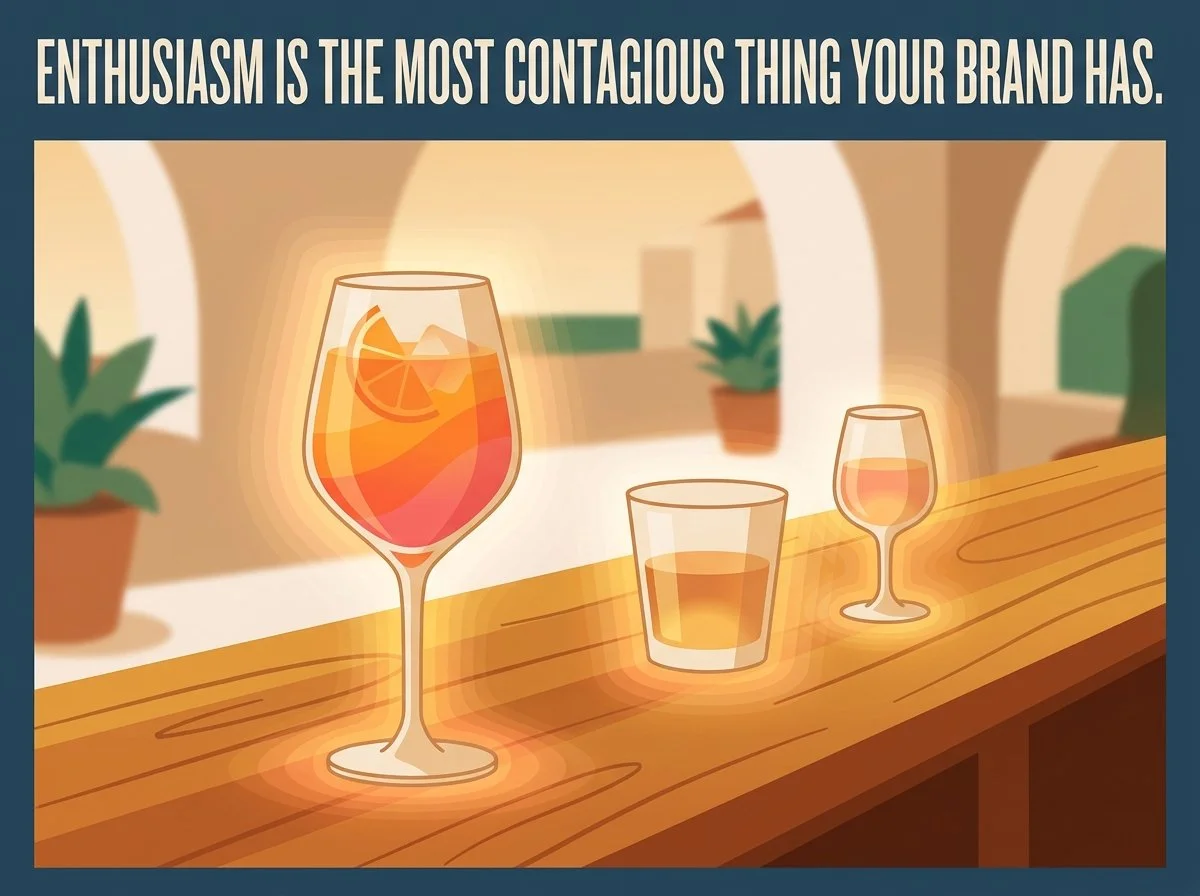
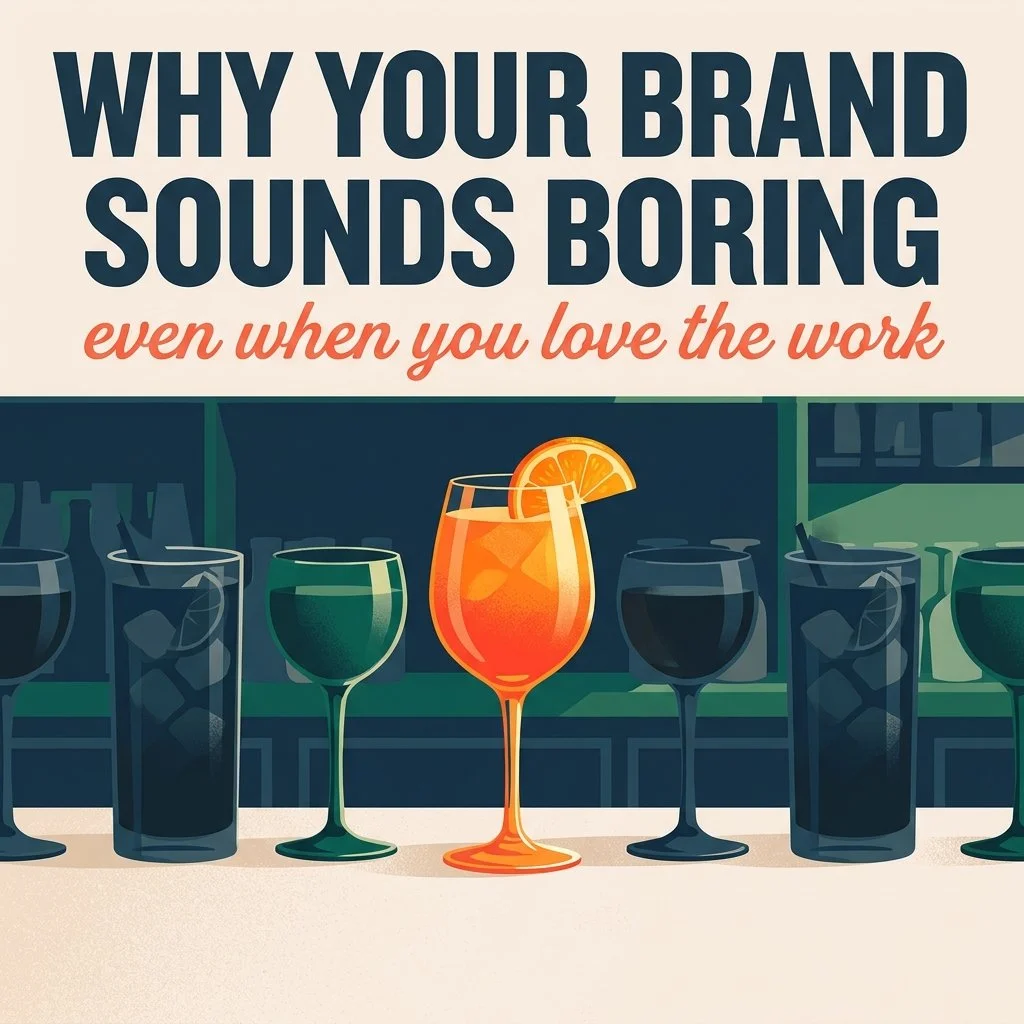
This month's drink picked itself, by the way. An Aperol Spritz has exactly one job and it does that job out loud, and you can spot one from across a patio before anybody takes a sip or explains a thing.
Nobody has ever ordered one to be taken seriously, and it still turns up on Drinks International's list of the world's best-selling classics, where just under 30% of the best bars on earth name it a top-ten seller.
It shares that list with the Negroni and the Old Fashioned, which is a very serious room for a drink that's essentially orange and delighted about itself. Somebody clocks it from across the patio and knows exactly what's in the glass, and that's the whole trick.
It's also what The Brand Bar checks every month. Your house account reads what you actually published, finds the specific line where your energy dropped, and hands you the one move worth making about it. August's pour is built on this exact question.
Pull up a seat at The Brand Bar →
Keep Reading
🔸 Your Brand Uniqueness Is Already There. You Just Keep Editing It Out.: Boring usually means you edited out the parts that sounded like you, so here's how to put them back.
🔸 Brand Chemistry: Why the Right Clients Just "Get" You: Specific details about what you love are what make the right clients feel like they found their person.
🔸 Can Someone Actually Describe What You Do?: Once your writing has some life in it, make sure a stranger can still tell exactly what you do.