Can Someone Actually Describe What You Do?
The Brand Message Clarity Check Most Business Owners Skip
You've done the work. You've built something real. You have clients, results, and momentum. And yet somehow, when someone asks what you do, the answer still feels like it takes three tries to land.
Or worse, you watch someone read your homepage, nod politely, and then ask, "So... what exactly do you help people with?"
That question stings.
Because you know what you do. You're great at it. You've got the receipts. But your brand isn't saying it clearly enough for someone else to repeat it back without editing.
And that gap between what you know and what your audience understands? That's where good-fit clients quietly disappear.
What Fuzzy Brand Messaging Actually Costs You
Here's what I see constantly with smart, experienced business owners: their messaging isn't wrong. It's just slightly too broad. A little too layered. A touch too "I serve everyone" when it should be razor-sharp about who gets the best results.
The brand looks polished. The copy sounds professional. But when someone lands on their site or reads their Instagram bio, they can't quite figure out whether this person is for them.
So they hesitate.
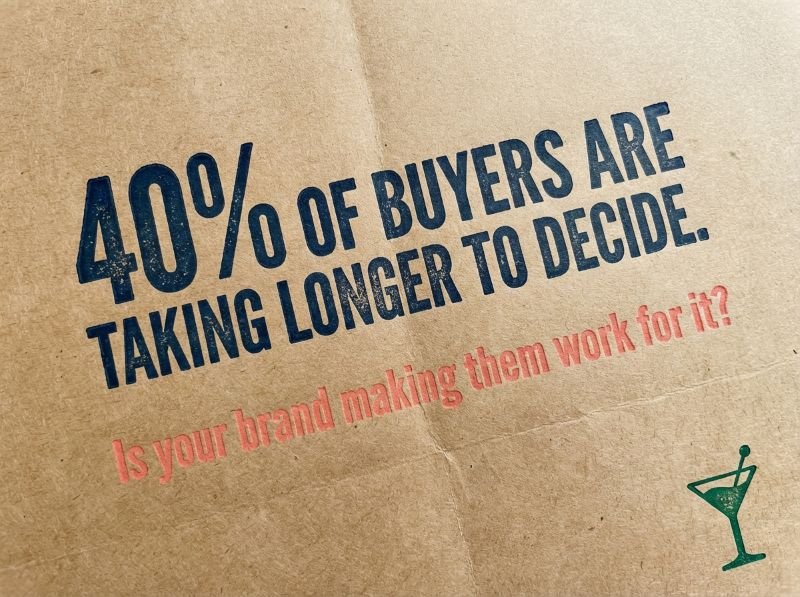
And hesitation is expensive. Research consistently shows that consumers are spending more time than ever verifying brand information before they buy. Gartner's 2025 data found that 40% of consumers now take longer to evaluate brands than they did five years ago. That's not because people are pickier. It's because most brands are making them work too hard to understand what's actually being offered.
For big companies, that's a slow leak. For solopreneurs and small business owners, it's the difference between a full roster and a half-empty one.
Why Smart Business Owners Still Get This Wrong
I want to be clear about something: this isn't a beginner problem. Brand clarity gets muddled precisely because you're good at what you do.
You've evolved. You've refined your process. You've added offers, shifted your audience slightly, learned new things. And each of those shifts introduced a tiny bit of drift into your messaging. Not enough to feel broken, but enough that your homepage says one thing, your Instagram bio says something adjacent, and your elevator pitch has three different versions depending on who's asking.
The data backs this up. Studies show that 95% of businesses have brand guidelines somewhere in a Google Doc or Canva folder. But only about 25% actually use them consistently. That means most of us have done the thinking at some point. We just haven't kept the message tight as the business grew.
This is why I think about brand clarity as maintenance, not a one-time project. You don't set it and walk away. You tune it.
The Niching Fear (And Why It's Backwards)
One of the biggest reasons brand messages stay vague is fear. Specifically, the fear that getting too specific about who you serve will push potential clients away.
I hear it all the time: "But what if someone needs my help and they don't see themselves in my messaging?"
Here's what I've found after 20+ years of doing this work: the opposite is true. When you're crystal clear about who you love working with, who gets the best results from your process, who you built this thing for, you actually pull in the people who are on the fence. The ones who weren't sure if you were the right fit? Your clarity answers that question for them. They see themselves in your specificity, and they lean in.
Being clear about your audience isn't about being exclusive. It's about being recognizable. And here's the part most people miss: even the people who aren't your exact ideal client will still be drawn to your confidence, your expertise, and the precision of your message. Clarity is magnetic regardless of whether someone fits the profile perfectly.
I'm living proof of this.
Half of my clients and audience don't actually drink. But they love the mixology metaphors. They love that I explain brand strategy in a way that feels fun and relatable. They know immediately that working with me won't be one-size-fits-all, and they know I'll make it interesting. The cocktail language doesn't exclude them. It tells them exactly what kind of experience they're walking into.
That's what a clear brand message does. It gives people a reason to choose you before you've even made the pitch.
What Clear Brand Messaging Actually Looks Like When It's Working
Think about a Whiskey Sour. It says exactly what it is. Strong and sour. Whiskey, fresh lemon, simple syrup. You taste it and immediately understand what's happening. There's no decoding required. No "wait, what's in this?" moment. The bold base comes through. The citrus is bright. The sweetness brings it into balance. It's direct, clean, and unmistakable.
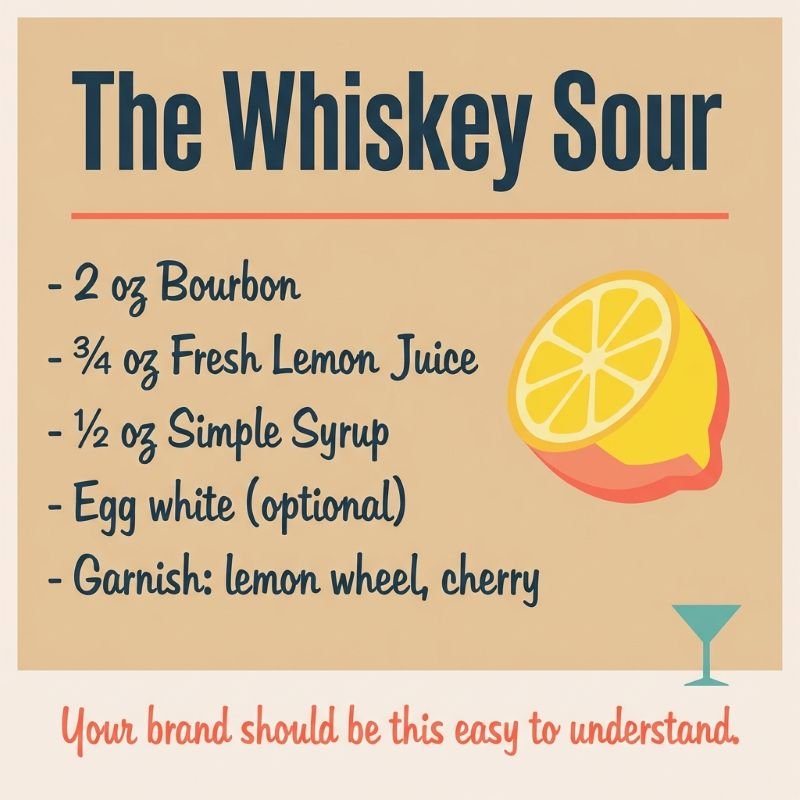
That's what your brand message should feel like to the person encountering it.
When clarity is working, a few things become obvious:
🔸Someone can visit your website and tell a friend what you do in one sentence, without embellishing or translating.
🔸Your content feels cohesive because you're not trying to be five things to five different audiences.
🔸Your offers feel connected because they all point back to the same core idea.
🔸Selling feels lighter because you're not constantly re-explaining yourself.
Businesses that maintain consistent messaging see measurable results. Research from Lucidpress shows that brand consistency can increase revenue by up to 23%. That's not because consistency is flashy. It's because repetition builds recognition, and recognition builds trust.
When your message is clear, people don't have to work to understand you. They recognize themselves immediately. And that changes everything about how they engage with your business.
The "Say It Back to Me" Test
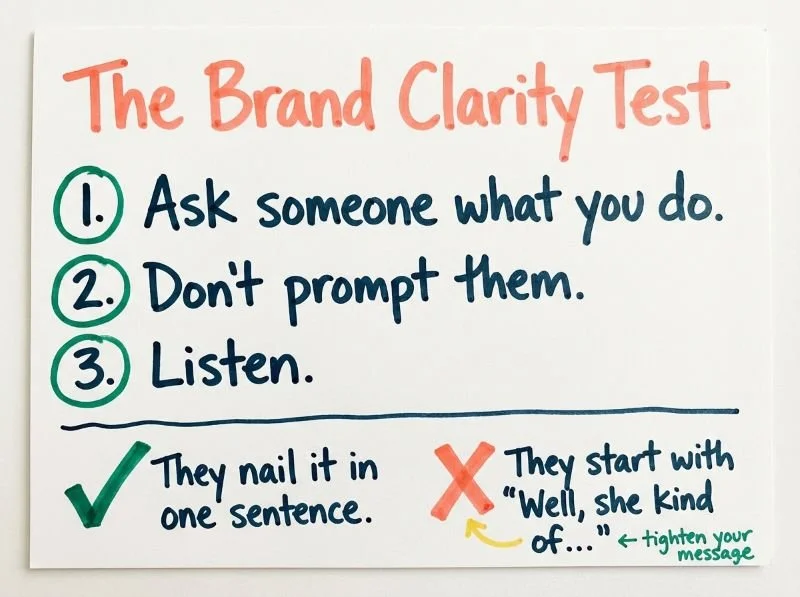
Here's the simplest way to pressure-test your brand clarity right now.
Ask someone who knows your work (a friend, a peer, a past client) to describe what you do. Don't prompt them. Don't give them a script. Just listen.
✅ If they nail it in one or two sentences, your message is clear.
❌ If they hesitate, add qualifiers, or start with "well, she kind of does..." your message needs tightening.
This isn't about having the world's most clever tagline. It's about making your work easy to understand, easy to repeat, and easy to choose.
A few pressure points to look at:
🔸Your bio. If someone only read one line about you, would they understand what you do and who it's for? Try writing a version that a friend could say back to you at brunch without editing.
🔸Your offers. Can someone scan your services and immediately understand how they connect? Or does it feel like a buffet where everything is equally highlighted and nothing leads?
🔸Your audience language. Are you consistent about who you serve? If "solopreneurs" becomes "entrepreneurs" becomes "business owners" becomes "professionals" across different platforms, you're introducing subtle confusion that makes your reader pause.
🔸Your homepage. When someone lands there, can they answer "what does this person do and is it for me?" within five seconds? If the answer requires scrolling, decoding, or translating a metaphor, it's too complex.
If any of these feel familiar, you don't need a rebrand. You need a tune-up.
Brand Message Clarity Compounds Over Time
Here's what makes this worth your attention right now. Brand clarity isn't a one-time fix. It's a compounding asset.
Every time someone can clearly describe what you do, that's a referral waiting to happen. Every time your messaging is consistent across platforms, that's trust being built with someone you haven't met yet. Every time your offers feel connected and intentional, that's one less objection standing between you and a yes.
The business owners I work with inside The Brand Bar know this. Brand clarity isn't something you nail once and forget about. It's something you check in on regularly, especially as your business evolves, your offers shift, or your audience matures. Every month, Brand Bar members get a structured recipe focused on one specific piece of their brand (like this month's focus on clarity) with personalized insights on where their message is sharp, where it's drifting, and exactly what to tighten. That kind of regular refinement is what keeps a signature brand feeling intentional as it grows.
Strong brands get built once. Signature brands get refined over time.
And it all starts with making sure someone can actually describe what you do.
Your brand has one job: make it obvious. If you're ready to keep that message sharp as your business evolves, The Brand Bar is where signature brands are maintained.
Keep Reading
🔸 How to Build Trust With Your Brand at First Sight: Clear messaging is one of the signals people use to decide whether to trust you, and this post covers the rest.
🔸 How to Make Your Brand Memorable: Clarity gets you understood, and this post covers what gets you remembered.
🔸 What Is a Strong Brand (and Why So Many Still Get Overlooked): See why a clear, consistent brand is the baseline and what it takes to become the obvious choice.