Your Brand Voice Is More Than a Few Good Adjectives
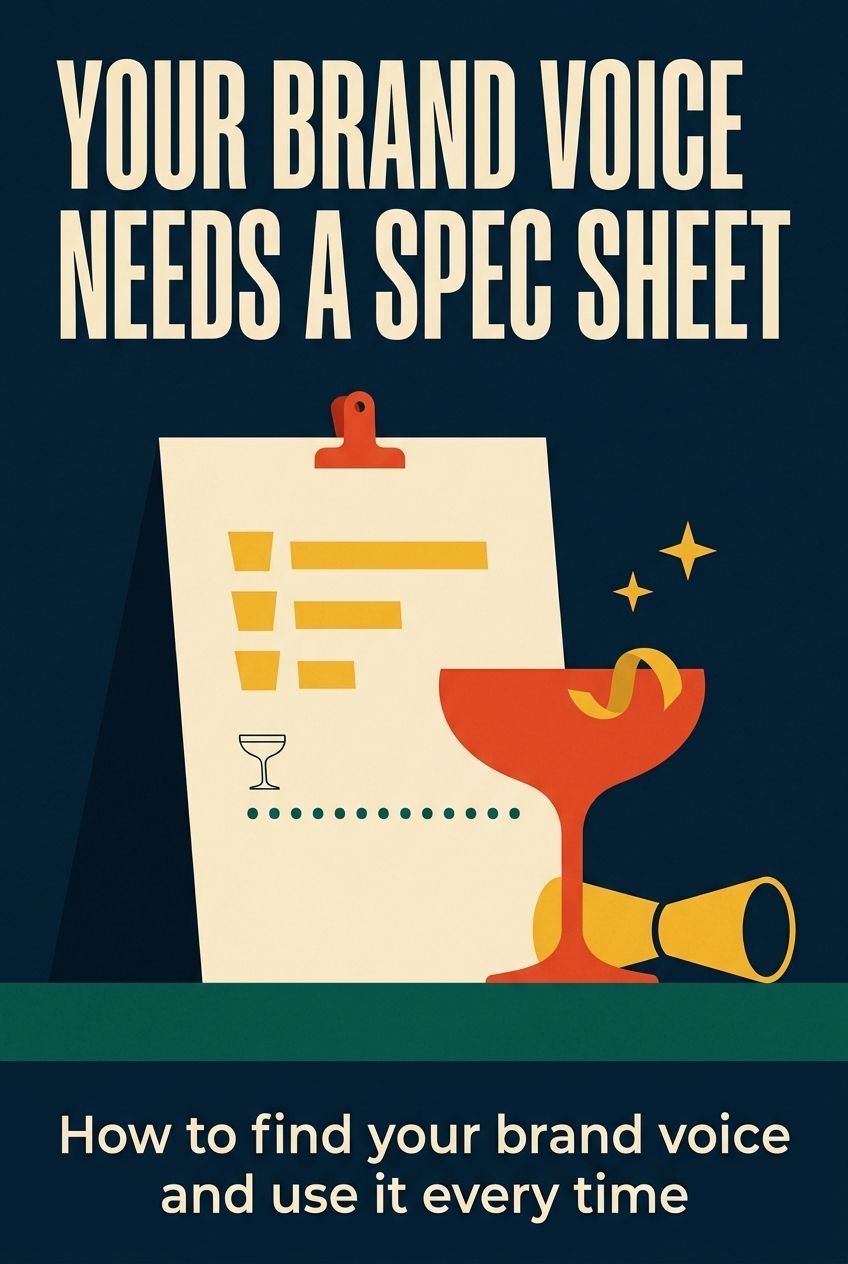
Every good bar keeps a spec sheet behind the counter. It lists the exact pours, the glass, the ice, and the garnish, so the drink you loved on Friday tastes the same when a different bartender makes it on Tuesday.
On the menu, that drink is bright, a little bitter, and refreshing. The spec sheet is how anyone behind the bar makes it right.
Your brand needs a spec too. When you set out to find your brand voice, you usually walk away with the menu description, and the spec is what keeps you sounding like you no matter who is behind the bar.
Your brand voice is the way you naturally write and talk, from the words you reach for to how you build a sentence, and it's how people recognize you before they see your name.
What is a brand voice?
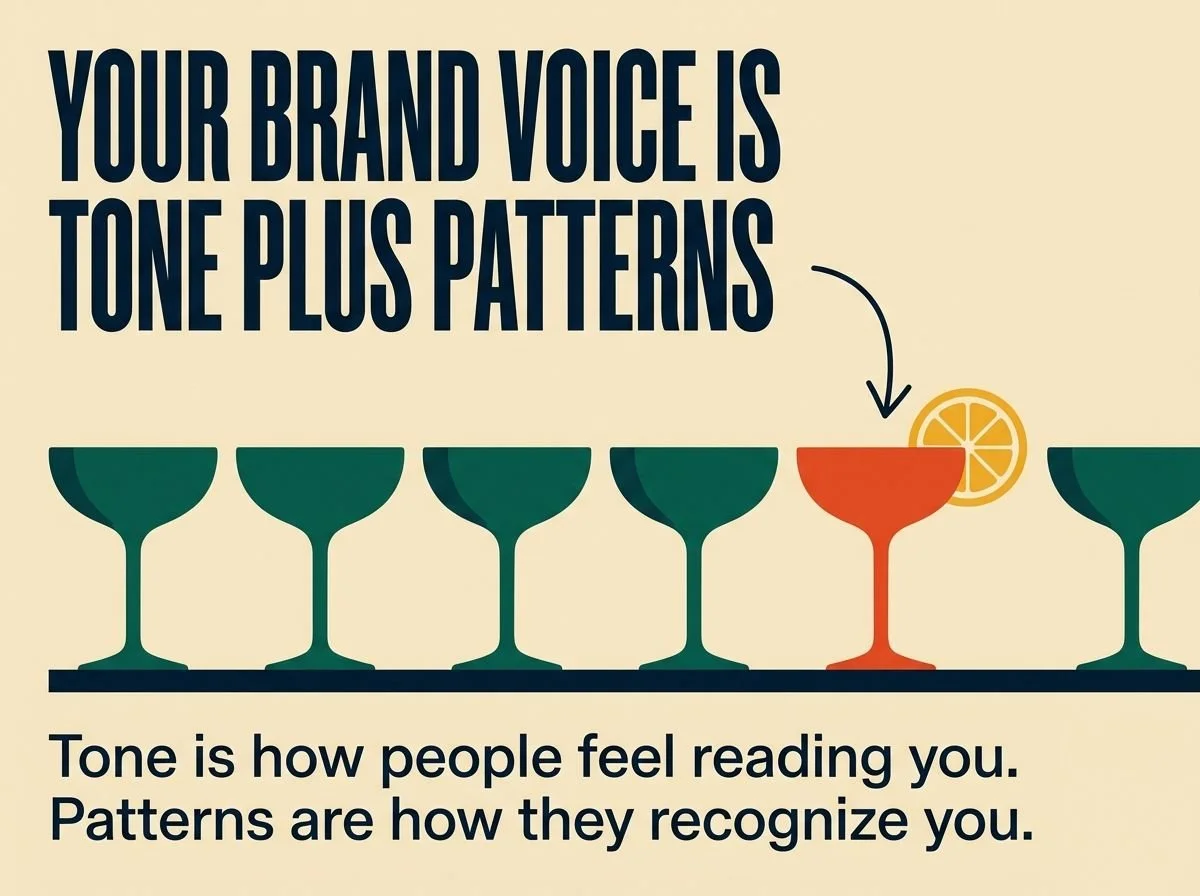
A brand voice is your tone plus your patterns. Tone is the feeling people get when they read you, and patterns are the moves you make without thinking about them.
"Friendly and professional" tells me very little about what it's like to spend an hour with you. Mine is an unlimited mimosa brunch with friends: we're two or three mimosas in, spilling the tea, and someone says, "Okay, can I get real for a minute?"
That scene gives me something to write from. The patterns underneath it get specific, like opening a post as if the conversation already started and using a real number where an adjective would be easier.
Your voice lives in the Personality pillar of the three pillars every Signature Brand is built on. People remember how you made them feel, and they recognize you by your patterns.
Why is it so hard to find your own brand voice?
It's hard to find your own brand voice because you're too close to it. You write that way without thinking, so to you it just feels like writing.
Your voice is already sitting in what you've published: your LinkedIn posts, your About page, and the Instagram caption you almost didn't post. Someone has to read it, pull it out, and name the pattern.
That's the work I do as Kristin Lawton, founder of District Brand Bar. I bottle solopreneurs' brilliance, and most of the time that brilliance was there all along. You might even be editing your personality out of your own content before anyone gets to see it.
Why can't AI write in your brand voice from a description?
AI can't write in your voice from a description because "warm and friendly with a touch of professional" gives it the mood and leaves every sentence up to its own habits.
The famous AI tells that water down a brand, like em dashes and certain buzzwords, are easy to cut now. What's left lives a level underneath the words, in the shape of the sentences, the rhythm, and the way a point gets made twice.
In Brafton's June 2026 survey of 132 marketers who use AI, 87 said their top concern was content that sounds thin or generic, and Brafton pointed to AI falling back on repetitive sentence structures.
For years I taught people to paste in a piece of writing they loved and ask ChatGPT to name their brand voice. What comes back is a lovely paragraph about you, and AI treats it like a menu description.
AI writes like you when it gets the spec: "Open mid-thought." "Use a real number instead of an adjective." "End LinkedIn posts with one direct question." Rules like these tell it how you build a sentence, so the draft starts from your habits instead of its own.
What does a brand voice tool look like?
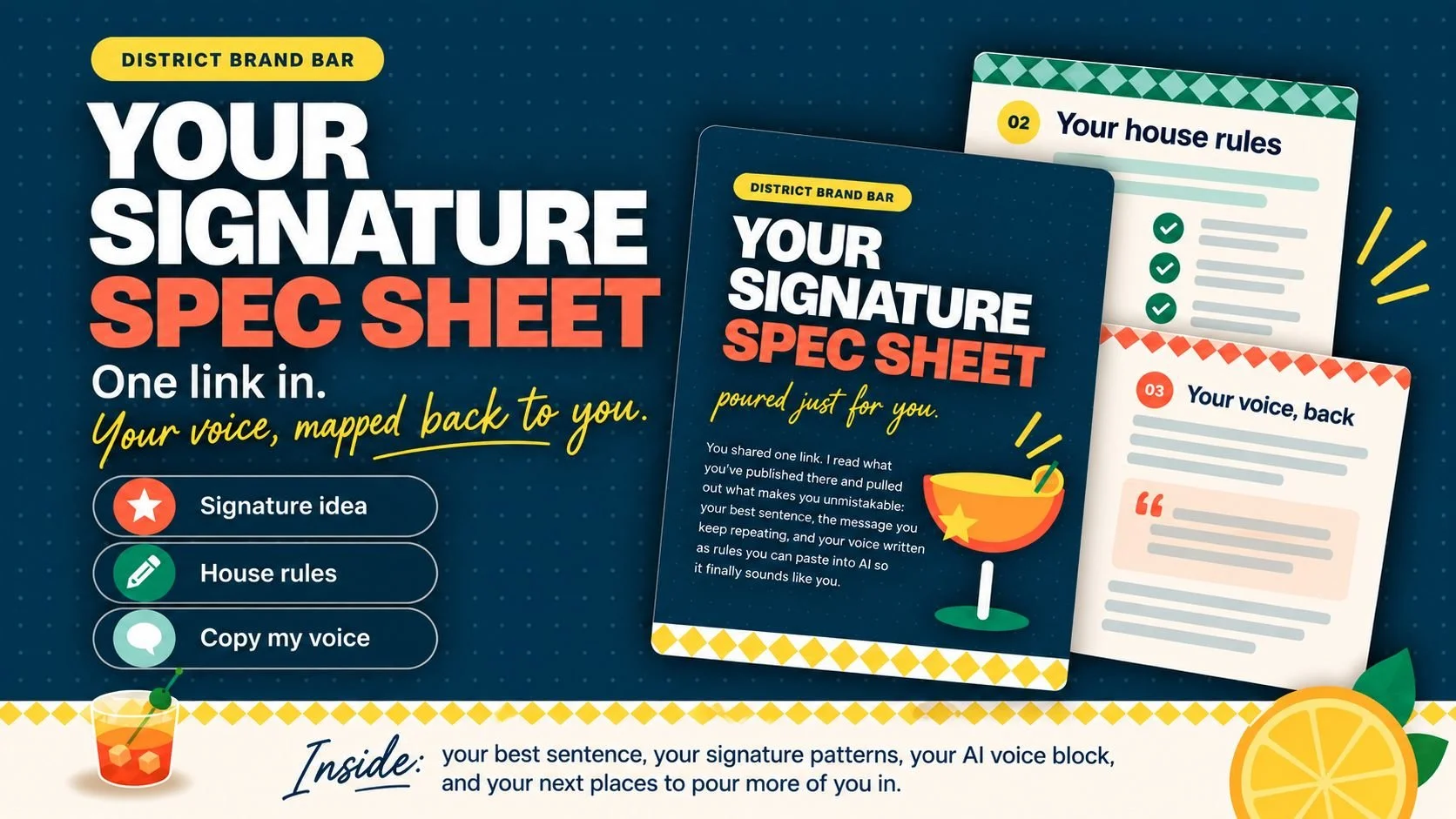
A brand voice tool turns what you've already published into a spec you can hand to anyone, including AI. The Signature Spec Sheet is the one I built for your brand.
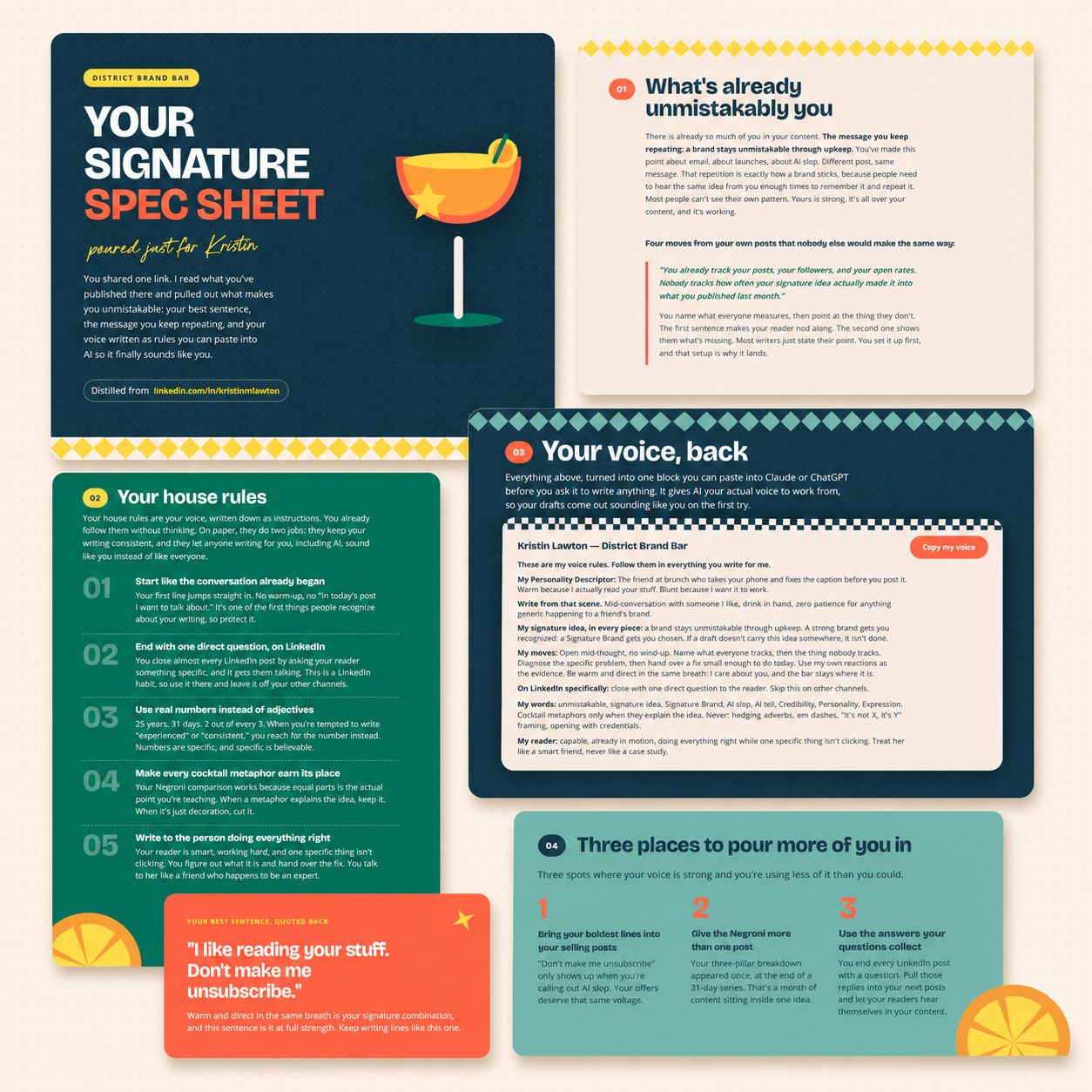
You give it one public link, your website, your LinkedIn, or your Instagram. It reads what you've already put out into the world and hands you back a personal dashboard with:
🔸 What's already unmistakably you: the message you keep repeating, the moves from your own posts that nobody else would make the same way, and the words you own.
🔸 Your best sentence, quoted back: the line that sounds most like you, with why it works so you can write more like it.
🔸 Your house rules: your voice written as instructions, so your writing stays consistent no matter who is drafting it.
🔸 Your voice, back: one block with your Personality Descriptor and your rules that you paste into Claude or ChatGPT before you ask it to write anything.
🔸 Three places to pour more of you in: the spots where your voice is strong and you're using less of it than you could.
I want reading it to surprise you a little. Mine picked "I like reading your stuff. Don't make me unsubscribe." as my best sentence, the line that tells a friend I read her emails and warns her in the same breath.
Meg Desjarlais of Purpose & Pixel said hers named her tone exactly as "a polished hotel lounge, cool jazz playing" and caught "Visual Credibility System," a phrase she uses on purpose to describe her work. Her favorite part was that the guidelines were specific enough to use.
How do you use your brand voice once you find it?
You use your brand voice by keeping it where you write. The voice block goes into your Claude project or ChatGPT instructions, so your first drafts start closer to you.
If you work with a VA, a copywriter, or a designer, hand it to them. I don't have a team, so mine went straight into Claude.
It also lives in my back pocket. Before I post, record a YouTube episode, or send an email, I pull it back out and ask myself, "Is this me?"
That check is how you stay the same person on LinkedIn, on Instagram, on your website, and on camera. It's how brand consistency across platforms happens on purpose, with your spec open on the counter every time someone new steps behind the bar.
Where can I get the Signature Spec Sheet?
The Signature Spec Sheet is $47 for one public link and one personalized dashboard, delivered to your inbox in under an hour. You can keep it, revisit it, and print it.
Your brilliance is already in your content. Get your Signature Spec Sheet and see what's been sounding like you all along.
Quick Answers
What is the difference between brand voice and tone? Your brand voice stays the same everywhere, and your tone shifts with the moment. You're the same person in a launch email and a LinkedIn comment, you just adjust how much sass you bring to each.
How do I get ChatGPT or Claude to write in my voice? Give it rules pulled from your real writing instead of a list of adjectives, and put them in your project or custom instructions so every chat starts there. Then read every draft before it goes out, because AI slides back into its own habits.
Which link should I use for my Signature Spec Sheet? Pick the public page where you sound most like yourself. For a website, that's usually your homepage, About page, or a sales page with plenty of copy, and for LinkedIn or Instagram, it's the profile where you post regularly.
Keep Reading
🔸 Why Your Brand Sounds Boring (When You Love the Work): If your content sounds like you and still falls flat, this post shows what's missing.
🔸 How to Make Your Brand Memorable in Three Steps: Once you know your signature moves, this is how you repeat them until people remember you.
🔸 What Is a Strong Brand (and Why So Many Still Get Overlooked): Your voice is one piece of it, and this post shows the difference between a brand that gets noticed and one that gets remembered.