What Is AI Slop? How to Spot It Before It Waters Down Your Brand
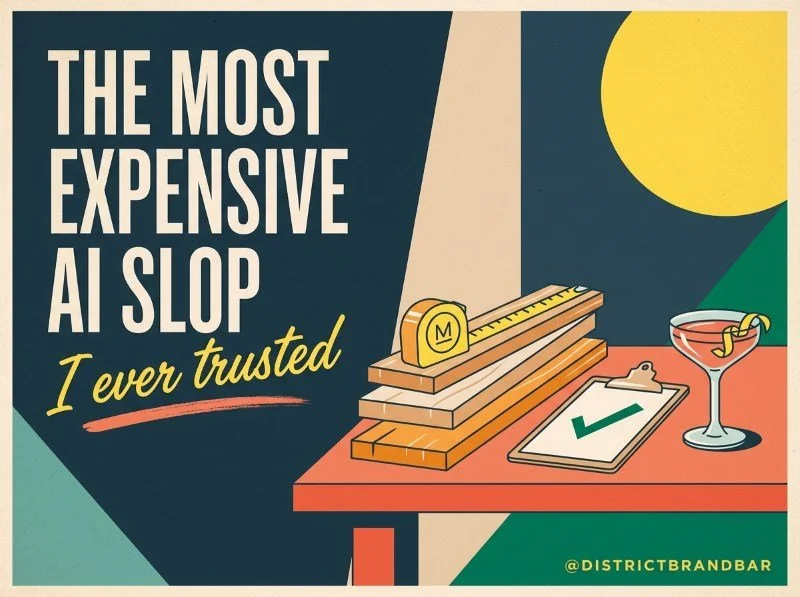
The most expensive AI slop I've ever trusted cost me $1,000 in wood.
I asked Claude for the full specs on a weekend construction project with my husband, and it gave us the wrong dimensions like it knew exactly what it was talking about. My husband cut every piece at once, so every piece came out wrong.
Wrong measurements are easy to catch once the wood is cut. The AI slop in your emails, captions, and sales pages is harder to spot, and it waters down the reason people pick you in the first place.
What is AI slop?
AI slop is content that looks fine at first glance and falls apart when you read it closely. The grammar is clean, but the sentences don't say much or move your point forward.
It's everywhere because AI is good and fast, and plenty of strong writers use it to get better. In a Q2 2026 survey from Fractl and Search Engine Land, nearly half of marketers said AI made their work faster but more generic, and only 26% said it made their work faster and better.
Faster and more generic works fine for a grocery list. For a brand, generic is the problem.
Why is AI slop bad for your brand?
AI slop is bad for your brand because it makes you sound like everyone else, and people forget brands that sound like everyone else. I'm Kristin Lawton, founder of District Brand Bar, and I build brands to be unmistakable, remembered, and the obvious choice in the room, so slop is my professional nemesis.
Your readers notice more than you'd think. When Klaviyo surveyed 8,000 consumers in December 2025, nearly 1 in 5 said they see low-quality or generic AI content from brands every week, and 32% said they trust a brand less when it clearly uses AI-generated content.
That number keeps climbing. The Fractl survey found 39% of consumers now say heavy AI use would make them trust a brand less, up from 20% a year earlier.
Lazy is a brutal word for someone who spent years getting great at what they do. It's also what your reader thinks when your email sounds like the last one they opened.
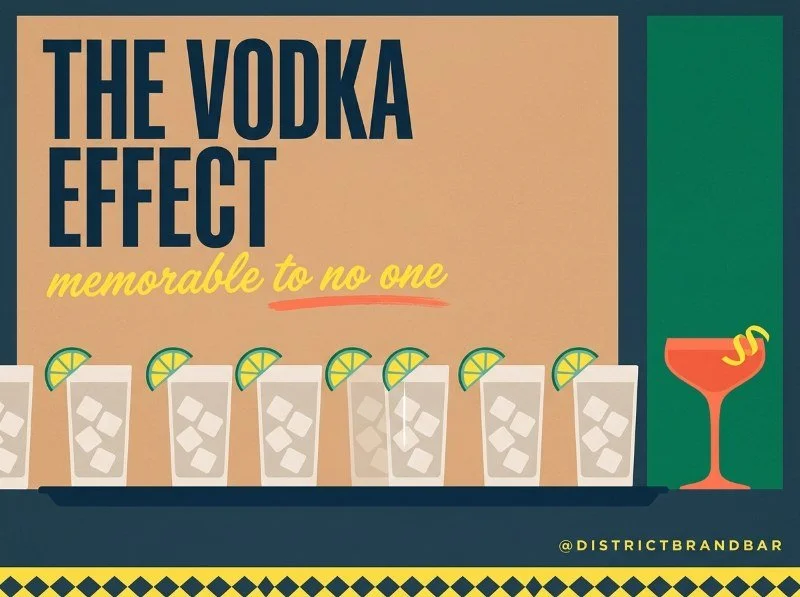
I call this the vodka effect: a brand distilled so many times it tastes like nothing, easy to mix with anything and memorable to no one. AI gets you there fast, because every draft runs through the same house style everyone else is using.
What are the signs of AI writing?
The signs of AI writing fall into five categories: voice, fingerprints, specificity, repetition, and accuracy. Em dashes and rocket emojis got so famous that people started cutting them, but the slop that's left is harder to spot, and you need to know what you're looking for.
Voice: no one's home
The first sign is writing that could have come from any business in your industry. Watch for openers that tease a big secret and then deliver something everyone already knew.
Same goes for phrases like "to be totally transparent." If you have to tell me you're being straight with me here, I start wondering about the rest of the email.
Your personality is usually there in your first draft, and it's easy to edit it out yourself before AI ever touches it.
Fingerprints: sentence habits AI can't quit
These writing habits show up in almost every AI draft:
🔸 Negation for rhythm. AI loves describing your offer by listing everything it isn't. Every time you tell your reader what it's not, that's what they start thinking about, and your offer slips right out of their head.
🔸 Denials that plant a problem. When AI reassures your reader that something didn't go wrong, the reader starts wondering what did. That problem didn't exist until you mentioned it, and now it's sitting in your reader's head right next to your news.
🔸 Pronouns that don't point anywhere. Words like "that," "it," and "this" show up without a clear connection to what they mean. Your reader has to go back and reread to figure out what you're talking about, and that's the moment you lose them.
🔸 Short sentences stacked for drama. AI piles up a few tiny sentences in a row to make an email sound punchy or poetic. It looks dramatic, but each one says so little that the reader finishes the paragraph and can't tell you what it said.
Specificity: details that could belong to anyone
AI describes feelings in general terms, so your reader gets "a busy season" instead of the Diet Coke-fueled week before a launch. Specific details are what make the right reader think "that's me."
AI also makes things up, because specific details are persuasive. That can mean a made-up client story, a number that sounds real but isn't, or an example about your own brand that makes you look worse than you are.
Repetition: saying it twice
AI makes a point, makes it again in different words, and then summarizes it in the close as if it's news. When the same idea keeps showing up, your reader stops paying attention.
AI also explains your jokes. Drop in a pop culture reference and it'll add a paragraph explaining what you meant, which kills the joke every time.
Accuracy: confident and wrong
This is the category that cost me $1,000, and Claude didn't even blink when it gave us the wrong measurements. AI will throw out a date, a price, or a number that is flat-out wrong, and it won't give you a single hint that it made it up.
It does the same thing with stories about you and your business. Check every fact before you hit publish.
Why can't you tell AI to stop writing slop?
You can't just tell AI to stop, because it slides right back into its old habits even when your instructions are great. I write detailed brand playbooks for a living, and Claude still puts a phrase I banned right back into the next draft.
AI is also its own biggest fan. It tells you the draft is great, you're short on time, and you hit publish.
What catches slop is a second read, using the same list of tells every time, before anything goes live.
What is the AI Slop Detector?
The AI Slop Detector is a Claude skill and custom GPT I built to run that second read. It checks your content against the five categories above and quotes the exact lines to fix.
I built it after that $1,000 weekend and launched it with a campaign called Save My Marriage, a joke GoFundMe to win back the cost of the wood (my husband was that mad).
🔸 Voice Check scores whether your writing sounds like a real person, and it's where the Personality pillar of my Signature Brand Framework either comes through or gets lost.
🔸 Slop Scan quotes every fingerprint it finds, names the pattern, and scores how much slop is in the draft.
🔸 Specificity Check scores whether your details are sharp enough for the right reader to see herself in them.
🔸 Repeat Offender catches every spot where you make the same point twice.
🔸 Where I Probably Messed Up lists every number, date, stat, and claim about you that you should double-check. Those construction measurements would have been first on the list.
Every check comes back with a scorecard and a verdict of pass or needs work, and you need an 8 out of 10 average to pass. You also get a Gaslight Rating, a percentage that tells you how much to trust the draft.
How do you use the AI Slop Detector?
You use the AI Slop Detector by pasting in your draft and asking for the check. It works in Claude or ChatGPT, so you can use it wherever you already write.
In Claude, say "run the slop detector" or "is this slop?" and the scorecard comes back first, with every problem line quoted underneath. When it's done, it asks which category you want to fix first, so you know exactly where to start editing.
AI tells keep changing, so the detector changes with them. It gets a new tell list roughly every quarter, and the September 2026 update is live now.
Where can I get the AI Slop Detector?
The AI Slop Detector is $97, with lifetime access and every quarterly update included. Grab the AI Slop Detector and run your next email through it before you hit send.
It costs a lot less than $1,000 worth of wood
Quick Answers
Is all AI-written content slop? Content turns into slop when it skips the human edit, no matter who wrote the first draft. I use AI constantly in my business, and everything still gets read line by line before it goes out.
How do I make AI writing sound like me? Give AI your real stories, opinions, and specifics to work with, because it can only sound like you when it has something of yours to use. Then read every line before it goes out, and the AI Slop Detector makes that read faster.
Does the AI Slop Detector rewrite my content? The detector scores and flags by default, so the rewrite stays yours. If you want help fixing what it found, tell it which category to start with and it will work through the fixes with you.
Why do AI tells keep changing? The famous ones got so recognizable that people started cutting them, and the habits that are left are harder to see. That's why the detector's tell list gets refreshed roughly every quarter.
Keep Reading
🔸 Why Your Brand Sounds Boring (When You Love the Work): If your content is well written but still falls flat, this post shows what's missing.
🔸 How to Build Trust With Your Brand at First Sight: AI slop makes readers trust you less, and this post covers how trust gets built the moment someone finds you.
🔸 Can Someone Actually Describe What You Do? Brand Message Clarity: When someone can describe what you do, that's a referral waiting to happen, and this post shows how to make your message that clear.