Should I Rebrand My Business? Read This Before You Start Over
If you typed "should I rebrand my business" into a search bar this week, I'd put money on one thing: your audience is just starting to recognize the brand you have. You've looked at your colors, your font, and your homepage every day for years. The people you want to hire you have caught them a handful of times, in between everything else on their phone. You're sick of your brand right as it's starting to work on them.
I call that the rebrand trap. The rebrand trap is starting your brand over because you're tired of it, which wipes out the recognition your audience was just starting to build. I led a $100,000 rebrand for a national nonprofit, so I'm a big fan of rebrands that solve a real problem. Most solo business owners I talk to are trying to solve a different one.
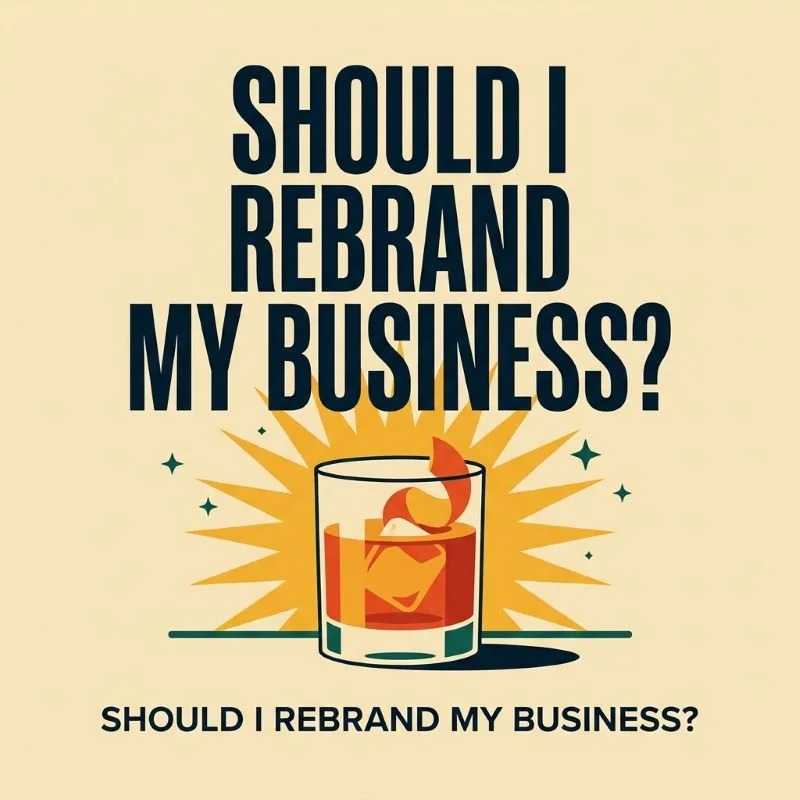
In the episode, I build an old fashioned behind the bar and count down the four reasons people reach for a rebrand. This post picks up where it leaves off: what a rebrand resets, and what to do instead.
Is it a brand problem or a marketing problem?
A rebrand fixes a brand problem, and most of what makes people want one is a marketing problem. A brand problem lives in your foundation: who you serve, what you do, and what you want to be known for. Marketing problems live in how that foundation gets served, from the launch to the platform to the copy on your homepage.
You have a brand problem when the foundation changed or was never set. The nonprofit rebrand I led was the first kind. By then, the organization had grown into twelve teams, each running in its own direction, and the old identity couldn't hold them together anymore. A new name gave everyone one story to tell. The second kind shows up when you consulted your way into your business and you're still running on default colors and a font you picked in a hurry. That calls for the first real brand you never had, even if it feels like a rebrand.
Everything else is marketing, and marketing gets edited.
Why does my brand feel boring to me?
Your brand feels boring to you because you see it far more than anyone else does. You open your website to fix a typo, you design every graphic, and you see your own colors on every post you schedule. Your audience gets a sliver of that.
The numbers back this up. A 2026 Socialinsider analysis of more than 870,000 brand posts found the average Instagram post reaches under 5 percent of a page's followers. The people who chose to follow you see a small share of what you put out, and everyone who hasn't followed you yet sees even less. Recognition gets built from those small shares, stacked up over months and years. That's how a brand becomes memorable: the same distinctive thing, seen again and again, until people know it's you before they read your name.
Bartenders know this feeling well. They've made the house cocktail so many times they could do it in their sleep, and they're probably over it. The regulars still order it by name, because it's the drink they come back for. When you're tired of your brand, that's usually the sign it's finally sticking.
What does a rebrand cost a small business?
The invoice is the smallest part of what a rebrand costs a solo business. Your bigger cost is the recognition your audience already connects to you, and a solo business has a lot less of it to spare.
A rebrand resets the people who could describe what you do to a friend, the colors someone clocks in their feed before they read your name, and the search results and bios that point back to you. Each one took time to build, and each one starts over the day you launch the new look.
Referrals take the biggest hit. In Edelman's 2025 brand trust report, friends and family topped the list of sources people trust for information about brands, at 84 percent across 15 countries, well ahead of a company's own CEO at 58 percent. A referral works because the person recommending you can explain what you do in a sentence. Change your name, your look, and your message at the same time, and every one of those people has to learn your story from scratch.
A big company can buy that recognition back with an ad budget. You'd rebuild it one post at a time.
Why the rebrand trap feels like progress
The rebrand trap catches smart business owners because building feels better than selling. I'd rather build something all day than sell it, and I know I'm in good company. A rebrand hands you new things to make, a reveal to plan, and people cheering you on in the comments. Selling hands you another week of the same work and waiting to see if it lands.
A lot of what feels like boredom is discouragement. When the business isn't moving the way you hoped, sitting with the same brand every day starts to feel exactly like being bored with it. A rebrand looks like the fix for both, and it resets the clock on the one thing that was still working for you: people starting to know who you are.
What to do instead of a rebrand
Edit the brand you have. A brand edit keeps the foundation your audience is learning and adjusts the parts that aren't pulling their weight. I run every edit through my Signature Brand Framework, the three pillars a strong brand is built on.
🔸 Credibility: sharpen what you want to be known for. When I focused my messaging around my niche, my brand got clearer and I kept everything people already knew about me.
🔸 Personality: put more of your opinions on the page. The reasons you do the work your way and the patterns you spot in your clients are what make a website sound like yours.
🔸 Expression: update how it looks and keep what people recognize. My colors were feeling muted, so I turned up the saturation and brightness and swapped a plain font for one with more character. Same brand, and I can't get enough of it now.
Edits like these give you the fresh energy you were chasing, and your audience keeps every bit of recognition they've built with you.
Before you rebrand your business, get an edit
The hardest part of editing your own brand is seeing it clearly after staring at it for years. That's what the Signature Brand Edit is for. I study your brand before we ever meet, we make sure your foundation is set, and together we find the places that aren't connecting with people. Then we bring your best thinking forward, so the brand you already have finally pulls its weight.
If you're itching to rebrand, get on the Signature Brand Edit waitlist first. Keep the house cocktail on the menu, and let's make it the best version yet.
Quick Answers
What's the difference between a rebrand and a brand refresh? A rebrand changes the foundation, which often means a new name, new positioning, or a new audience. A brand refresh keeps the foundation and updates how it shows up, like colors, fonts, and messaging. For most solo businesses, a refresh done as a thoughtful edit delivers what they wanted from the rebrand.
How often should a small business rebrand? A small business should rebrand when its foundation changes, so there's no set schedule. A brand can run for many years on the same core identity with small updates along the way. Regular check-ins on how your brand is showing up do more for you than a calendar reminder to start over.
Will a rebrand fix low sales? A rebrand rarely fixes low sales on its own, because slow sales usually trace back to the offer, the audience, or how often people see you. A new look shown to the same small audience still reaches the same small audience. Set the foundation if it's missing, fix the marketing if it isn't, and sales have something solid to stand on.
Keep Reading
🔸 What Is a Strong Brand (and Why So Many Still Get Overlooked): The difference between a brand that gets you in the room and one that gets remembered once you're there.
🔸 Why Your Brand Sounds Boring (When You Love the Work): If your brand reads flat, specificity is usually the missing ingredient.
🔸 You're Not as Consistent as You Think: Brand Consistency Tips: Where consistency slips across platforms, and how to make every channel feel like the same room.