Is ChatGPT a Yes Man? Why Your AI Lets You Play Small
You have the clients and the results, and you know your work cold. Then you sit down to write, and out comes "you could consider this, if you're interested." You paste it into ChatGPT, ask what it thinks, and it tells you the draft is ready to go.
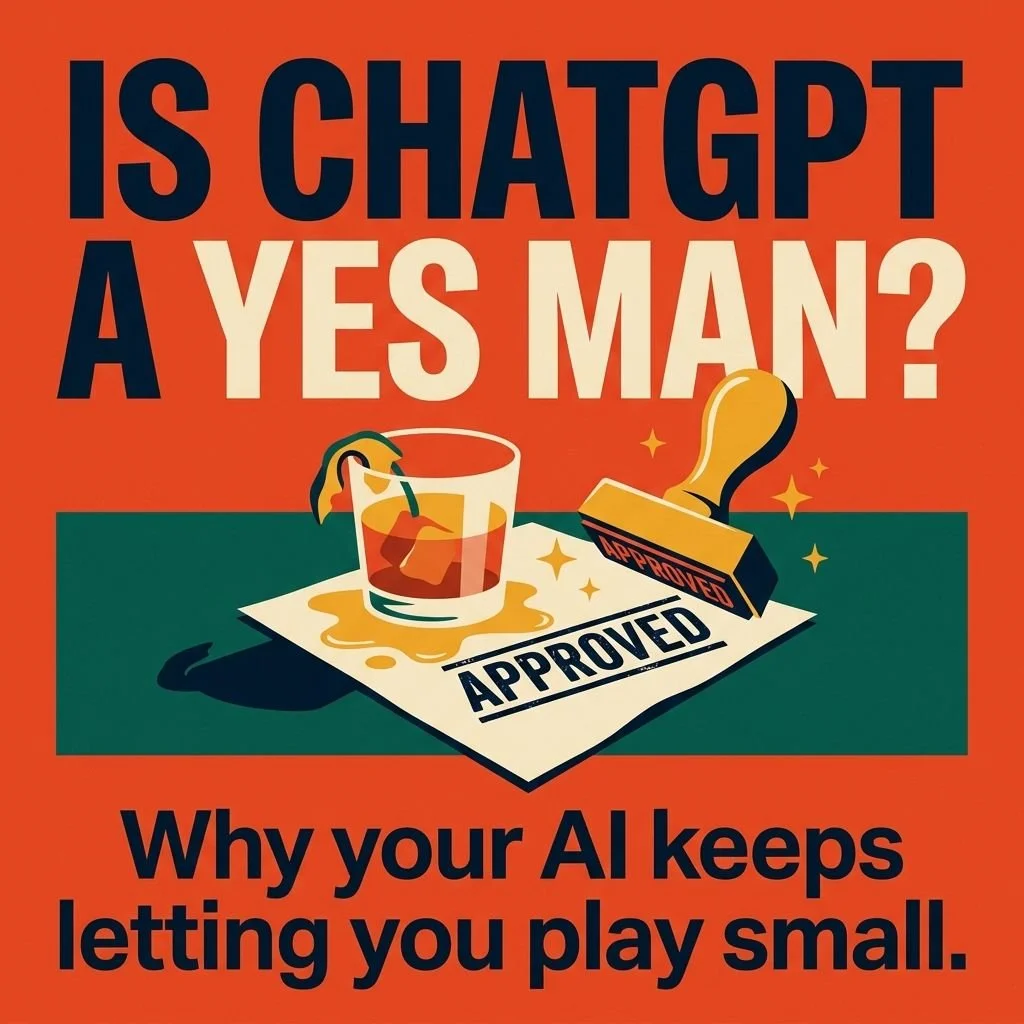
For most business owners, ChatGPT is a yes man, and that costs you more than any typo it catches. An AI yes man is an assistant that approves whatever you hand it, because it has nothing to measure your writing against. It polishes your hesitant sentences and sends them back cleaner and every bit as hesitant. I've spent 25 years in branding and marketing, and I still catch myself writing like I'm asking permission. That's why I set my AI up to call me out.
In the episode, I show the exact filter I gave my own AI and how it flags me. This post goes further into what playing small looks like on the page, and why your AI keeps letting it slide.
Why is ChatGPT such a yes man?
ChatGPT agrees with you because agreeing is its default. Ask for one small edit and it rebuilds your draft around that sentence. Hand it a half-baked idea and it maps out where to take it, without a single "hmm, I'm unsure about that."
Researchers have measured how far this goes. In a 2025 study by Myra Cheng and colleagues, 11 leading AI models affirmed users' actions 50 percent more often than people did. The more telling result came next: participants rated the flattering answers as higher quality, trusted the flattering model more, and wanted to use it again. We like being agreed with, so we keep going back to the tool that does it.
Your AI also has no scale to hold you to. It can't tell you a call to action is weak, because it has no idea what strong looks like for your brand.
What does playing small look like in your content?
Playing small is writing below the level of your expertise, and it tends to show up in four patterns. I built a check for each one into my own AI after spotting all four in my drafts.
🔸 Downplaying your authority. Phrases like "you could consider" turn a diagnosis you'd make with total certainty on a client call into a polite suggestion.
🔸 Putting your audience's pain ahead of your take. The piece lingers on how hard the problem is and barely gets around to what you actually think about it.
🔸 Hiding behind templates and trends. A format someone else made popular does the talking, and your point of view squeezes in wherever there's room.
🔸 Choosing safe over signature. You had the bold version in your head, and you wrote the one that couldn't possibly ruffle anyone.
Your call to action is where it shows most. Mine used to say "I'd love to work with you" and "if you're interested, click here." That's the friendly bartender: pleasant, polite, and so easy to turn down. What I meant was "I'm the person who gets you there. Build your Signature Brand with me."
What does playing small cost your brand?
Each hedge looks harmless on its own, and together they pile up. Stack enough "if you're interested" lines in a row and your brand starts to sound like it needs a permission slip to exist, let alone to charge for work you're already great at.
Your AI makes it worse. It smooths every hedge into tidier prose, the same way it waters your brand voice down into AI slop, and then it tells you the piece is ready. A brand can be polished and still sound unsure of itself, and that combination is exactly what a yes man produces.
How do you make ChatGPT more critical?
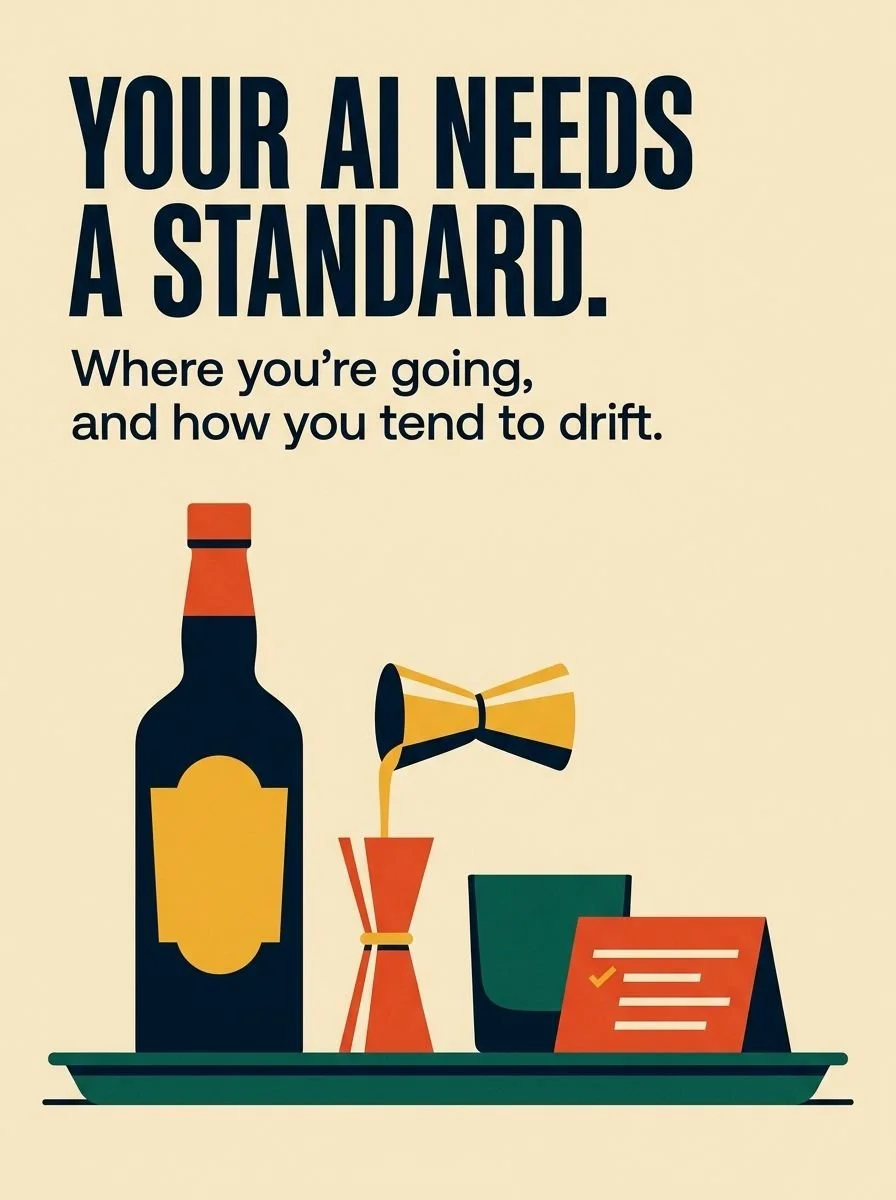
You make ChatGPT more critical by giving it a standard to measure your work against. Telling it to be tougher changes its tone, and it still has no idea what tougher means for you.
A useful standard has two parts: where you're going, and the specific ways you drift away from it. Mine is a statement of what I'm building with District Brand Bar, and it sits in front of every conversation I have with AI. I wrote it down because I was done playing small and wanted my AI to hold me to it. Every recommendation and every draft now gets scored against it, and once my AI has a score to work from, it stops calling everything wonderful. When a piece slips into one of those four patterns, it gets flagged as playing small.
The hard part is writing the standard. Your own drift is tough to see from inside your brand. When I spent two days with a client on their messaging and positioning, their blind spots were easy for me to spot, because I wasn't the one living in them. Everyone has comfortable places they slide back into, and the person sliding is usually the last to notice.
What changes when your AI measures you against your brand
Once your AI has a standard, its feedback stops being applause. It tells you the call to action is soft and points to the paragraph where your opinion got buried under caveats. And it asks the question that makes you reread the draft. Mine closes every check by asking what version I'd post if I weren't worried about being too much. That's usually the version people need to see.
You stop editing toward polished and start editing toward signature. Your content starts to sound like the expert your clients already know you are, which is why they hired you in the first place.
Get a monthly check on your content
The Brand Bar is where that check lives. Your yearly house account comes with a dashboard that scores your content against your Signature Brand, quotes your own lines back to you as examples, and hands you one focused next step each month. With that in place, your AI quits waving things through, and your brand gets to sound as good as you are.
Open your house account at The Brand Bar, and here's to being a little too much.
Quick Answers
Why does ChatGPT agree with everything I say? AI assistants lean toward agreeing with whoever is asking, and the 2025 Cheng study found people rate those agreeable answers as better, which keeps the habit going. Without a standard for your brand, agreement is the easiest answer it can give you.
Is ChatGPT good at giving feedback on writing? ChatGPT is strong on grammar, clarity, and structure. It's weak at telling you if a piece sounds like you or if you're holding back, because it has no picture of your brand unless you give it one.
How do I stop playing small in my business? Playing small usually shows up in your writing before anywhere else: hedged advice, soft calls to action, and safe takes. Naming where you're going makes those patterns easier to catch, and an outside check catches the ones you can't see in your own work.
Keep Reading
🔸 Your Brand Uniqueness Is Already There. You Just Keep Editing It Out.: Where your personality hides in your content, and how to stop polishing it away.
🔸 Why Your Brand Sounds Boring (When You Love the Work): If your writing reads flat even when you're excited, specificity is usually the missing piece.
🔸 What Makes a Brand Work: The 3 Signature Brand Pillars: The Signature Brand Framework your content gets measured against.